Research in the LaSharr Lab is focused on understanding the factors that regulate and influence the behavior, nutrition, and ultimately, fitness of wild animals.
Integration of movement behavior and animal state.
Despite rapid advancements in the field of movement ecology over the past 2 decades, research in movement ecology has mainly focused on the data components of describing behavior, and has barely begun to scratch the surface of an actual mechanistic understanding of behavior and decision making. One reason for this lack of mechanistic understanding is that movement alone often does not reflect the full context of the animal’s state. Without understanding the nutritional, disease, or reproductive context of an animal’s behavior, identifying the implications of movement behavior for fitness and population dynamics can be challenging at best, and misleading at worst.
The decisions wild animals make often are founded in their experiences and the conditions they are exposed to; understanding these choices, and their repercussions, often requires more than movement data. By integrating animal state into movement analyses we can better understand how behavior is influenced by not only environmental factors, but the internal state of individuals and the potential interaction of the two. Moreover, we have the ability to evaluate the mechanistic underpinnings of decision making, something that is often not possible in movement studies but is paramount to informed management.
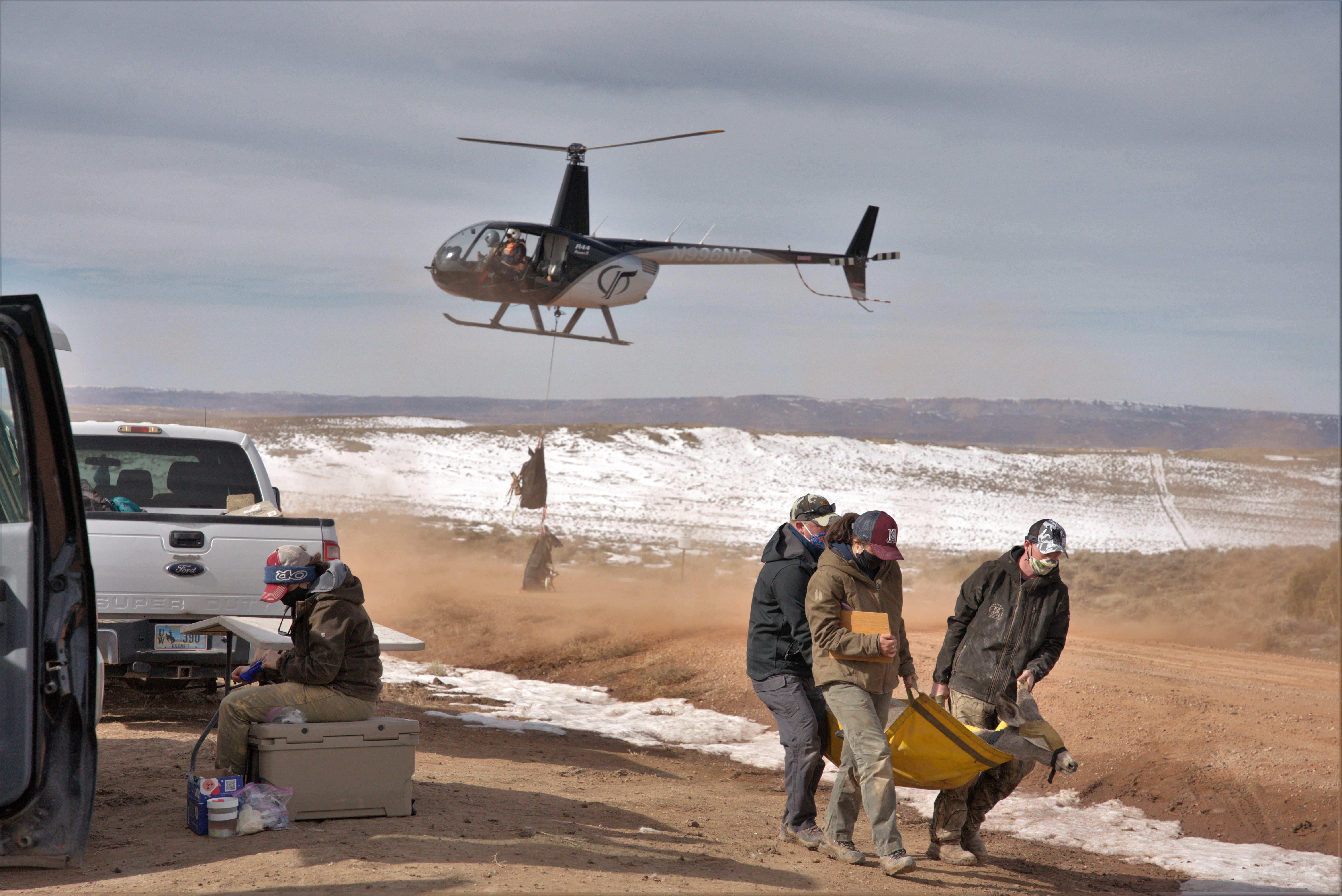
Population-level responses and fitness consequences to extreme environmental events.
Countless studies have highlighted that the world is changing at an unprecedented rate, and wild animals are forced to contend with conditions, experiences, and environments for which they are unprepared or maladapted. Understanding how animals 1) behave when faced with discrete, extreme disturbance events (i.e., harsh winters, wildfire, extreme drought events), and 2) how those experiences shape the decisions and behaviors of animals in the aftermath of that event will become increasingly important as biologists and scientists attempt to manage wild animals that are forced to navigate rapidly changing landscapes.
Weather patterns are becoming more irregular and animals are facing discrete, extreme environmental events (e.g., severe winter conditions) that are mismatched to the environments animals evolved adaptations to persist in. How animals behave both in the immediate face of those experiences and in the years following those events, and what that behavior means for population dynamics is still relatively unknown. Much of my recent research has focused on understanding both the immediate and long-term influence of a catastrophic winter on the behavior, reproduction, and survival of mule deer and the corresponding implications for population dynamics.
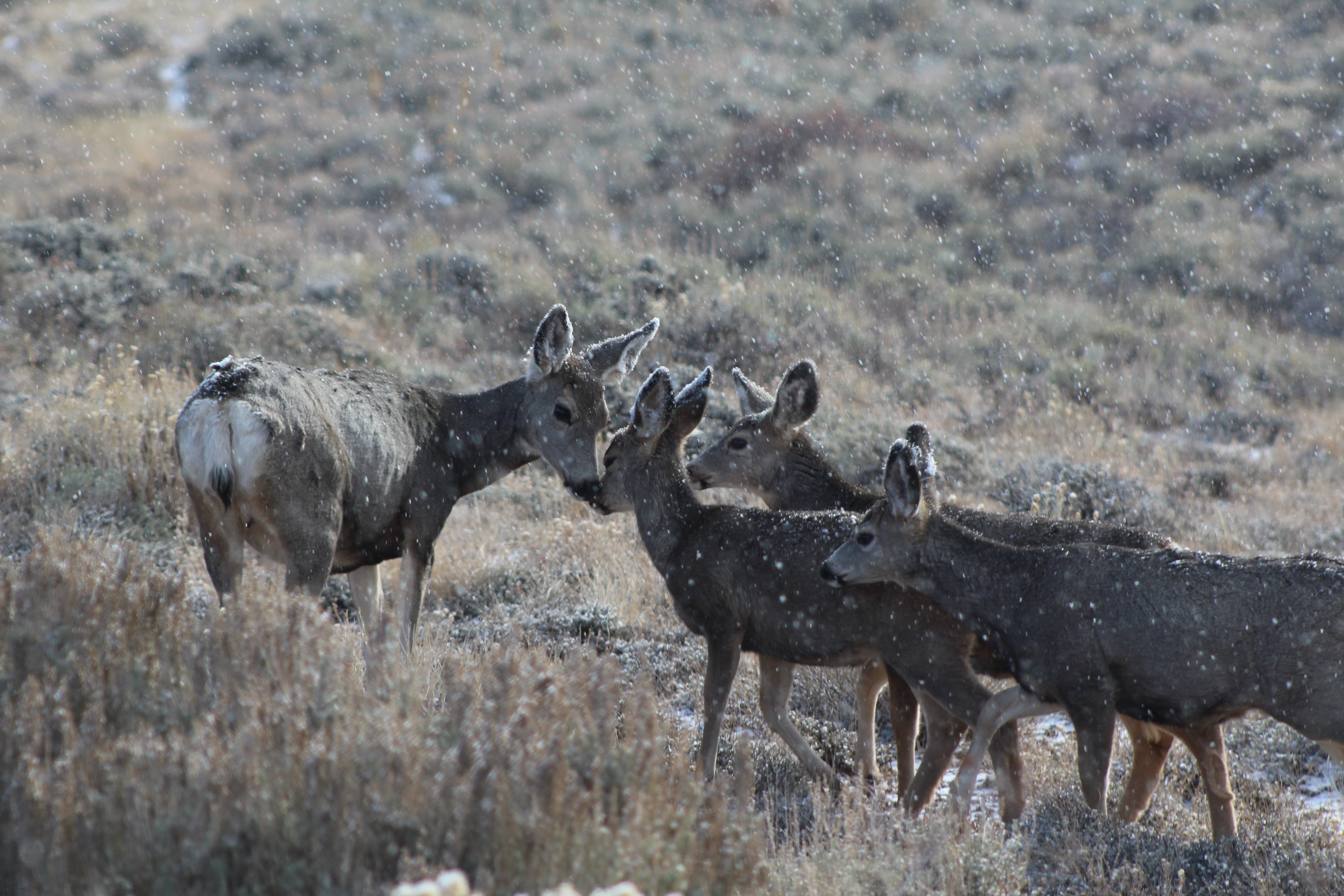
Collaborative and coproduction of research to inform wildlife management.
Scientific endeavors can only be meaningful if findings and interpretations can be understood and implemented beyond the scope of individual studies. Throughout my career, I aim to work in close collaboration with stakeholders, state agencies, federal agencies, and local communities to 1) develop questions and approaches to scientific studies and 2) implement the findings of that collective work in a way that benefits both the ecosystems we study and the communities that rely on those ecosystems.
A cornerstone of my research program is focused on strong collaborations and coproduction to yield meaningful science. By regularly engaging with collaborators and stakeholders throughout the scientific process—from question development and analytical approach to publication of manuscripts and public facing research briefs—I promote increased engagement and buy-in to the science we are collaboratively producing which directly improves our ability to implement it into on the ground management.
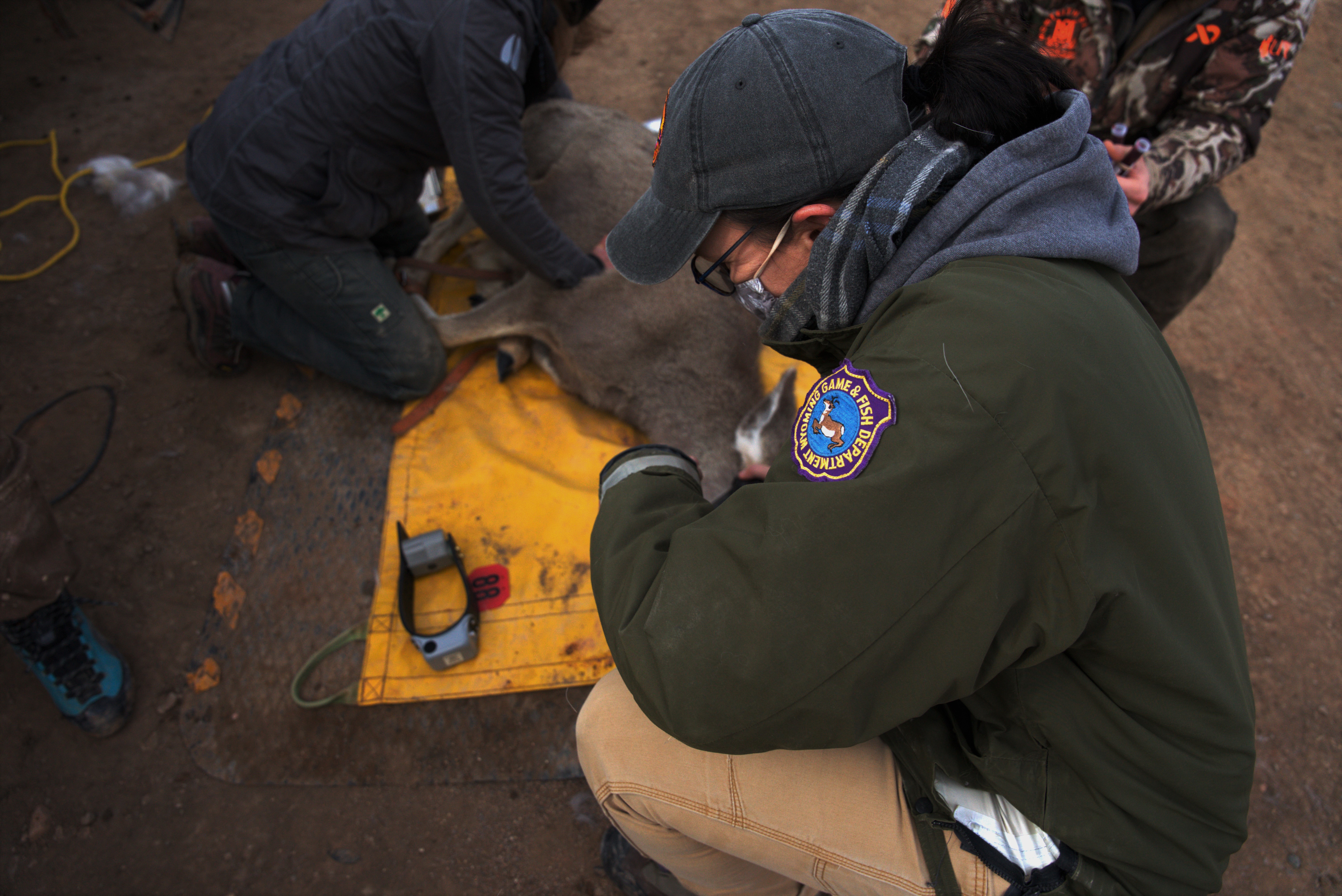
 LaSharr Lab